Manual vs. Automatic Poultry Equipment Investment: Which Is Right for Your Poultry Farm?
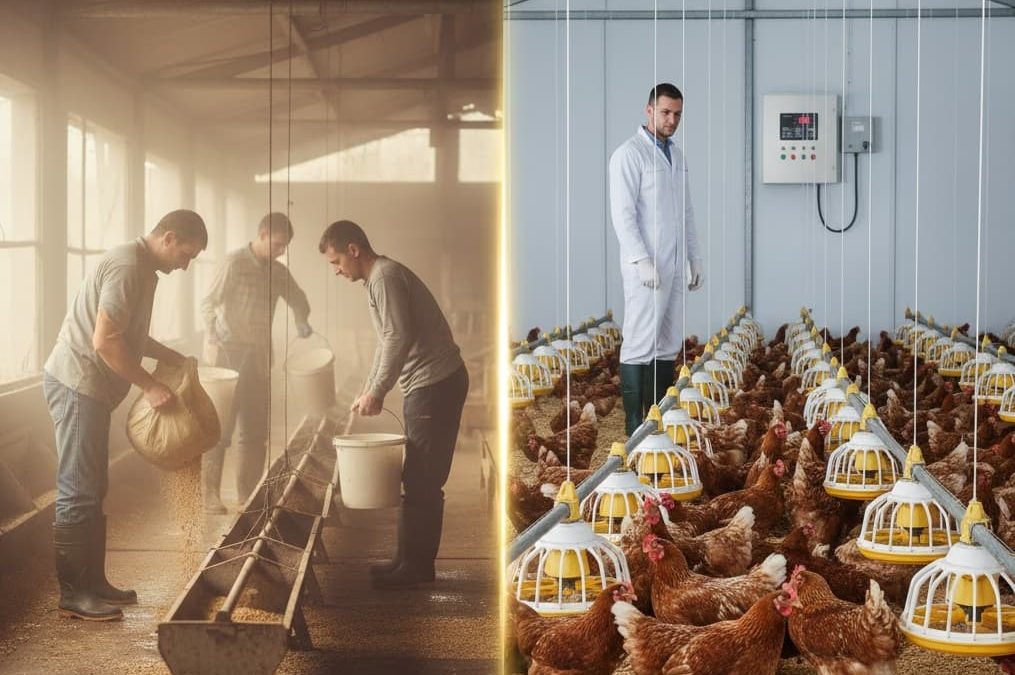
The poultry industry is evolving rapidly, and one of the most important decisions for farm owners is choosing between manual poultry equipment and automatic poultry equipment. This decision directly affects productivity, labor cost, bird health, and long-term profitability. For new and expanding poultry farms, understanding the investment differences, benefits, and limitations of both systems is crucial.
In this article, we provide a detailed comparison of manual vs. automatic poultry equipment investment to help poultry farmers make informed decisions.
Understanding Manual Poultry Equipment
Manual poultry equipment refers to tools and systems that require human operation for feeding, watering, cleaning, and egg collection. These systems are commonly used in small-scale and traditional poultry farms.
Common Manual Poultry Equipment
-
Manual feeders and drinkers
-
Hand-operated egg trays
-
Manual brooders
-
Simple ventilation systems
-
Hand-cleaning tools
Advantages of Manual Poultry Equipment
1. Lower Initial Investment
Manual poultry equipment is significantly cheaper than automatic systems, making it ideal for startup farms or low-budget operations.
2. Easy Installation and Maintenance
These systems are simple to install and repair, often requiring no technical expertise.
3. Flexibility in Operation
Manual systems allow farmers to closely observe birds and adjust feeding or watering as needed.
4. Suitable for Small Farms
For farms with fewer birds, manual equipment can be cost-effective and manageable.
Limitations of Manual Poultry Equipment
1. High Labor Cost
Manual operations require more workers, increasing long-term labor expenses.
2. Inconsistent Feeding and Watering
Human error can lead to uneven feed distribution, affecting bird growth and health.
3. Limited Scalability
As farm size increases, manual systems become inefficient and difficult to manage.
4. Higher Risk of Disease Spread
Frequent human contact increases biosecurity risks.
Understanding Automatic Poultry Equipment
Automatic poultry equipment uses mechanized and electronic systems to manage feeding, watering, climate control, waste removal, and egg collection with minimal human intervention.
Common Automatic Poultry Equipment
-
Automatic feeding systems
-
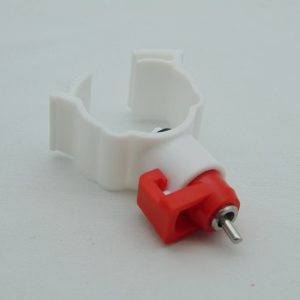
Nipple drinking systems
-
Automatic egg collection systems
-
Climate control and ventilation systems
-
Manure removal systems
Advantages of Automatic Poultry Equipment
1. Higher Productivity and Efficiency
Automatic systems ensure uniform feed and water distribution, improving growth rate and feed conversion ratio (FCR).
2. Reduced Labor Dependency
Automation significantly reduces manpower requirements, lowering long-term labor costs.
3. Better Bird Health and Welfare
Consistent feeding, clean water, and controlled environments reduce stress and disease.
4. Scalability for Commercial Farms
Automatic poultry equipment is ideal for medium to large-scale poultry operations.
5. Long-Term Cost Savings
Although initial investment is high, automation reduces operational costs over time.
Limitations of Automatic Poultry Equipment
1. High Initial Investment
Automatic systems require substantial upfront capital, which may not be suitable for all farmers.
2. Technical Knowledge Required
Operation and maintenance require trained staff or technical support.
3. Power Dependency
Most automatic systems depend on electricity, making backup power essential.
4. Repair and Replacement Costs
Spare parts and maintenance can be expensive if not sourced from a reliable supplier.
Manual vs. Automatic Poultry Equipment: Investment Comparison
| Factor | Manual Equipment | Automatic Equipment |
|---|---|---|
| Initial Cost | Low | High |
| Labor Requirement | High | Low |
| Operational Efficiency | Moderate | Very High |
| Farm Size Suitability | Small | Medium to Large |
| Scalability | Limited | Excellent |
| Biosecurity | Lower | Higher |
| Long-Term Profitability | Moderate | High |
Which Poultry Equipment Is Right for You?
The choice between manual and automatic poultry equipment depends on several key factors:
1. Farm Size
-
Small farms (500–2,000 birds): Manual equipment is often sufficient.
-
Medium to large farms (5,000+ birds): Automatic equipment is highly recommended.
2. Budget and Investment Capacity
-
Limited capital → Manual poultry equipment
-
Long-term investment plan → Automatic poultry equipment
3. Labor Availability
If skilled labor is scarce or expensive, automation becomes a smart solution.
4. Future Expansion Plans
Farmers planning to expand should consider investing in automatic poultry equipment early to avoid repeated upgrades.
Hybrid Approach: The Smart Middle Ground
Many modern poultry farms adopt a semi-automatic or hybrid system, combining manual and automatic equipment.
For example:
-
Automatic feeding with manual egg collection
-
Nipple drinkers with manual monitoring
This approach reduces costs while improving efficiency and is ideal for growing farms.
Why Choose a Reliable Poultry Equipment Supplier?
Whether manual or automatic, equipment quality directly impacts farm success. A trusted poultry equipment supplier provides:
-
Durable and certified equipment
-
After-sales support and spare parts
-
Custom solutions for different farm sizes
-
Installation and technical guidance
Choosing the right supplier ensures maximum return on investment (ROI) and long-term farm sustainability.
Final Thoughts
Both manual and automatic poultry equipment investments have their place in modern poultry farming. Manual systems are suitable for small-scale and low-budget farms, while automatic poultry equipment offers unmatched efficiency, scalability, and profitability for commercial operations.
Before making a decision, farmers should evaluate farm size, budget, labor availability, and future goals. Investing wisely today can ensure higher productivity, healthier birds, and sustainable profits tomorrow.