Introduction: Why Global Standards Matter in Poultry Equipment
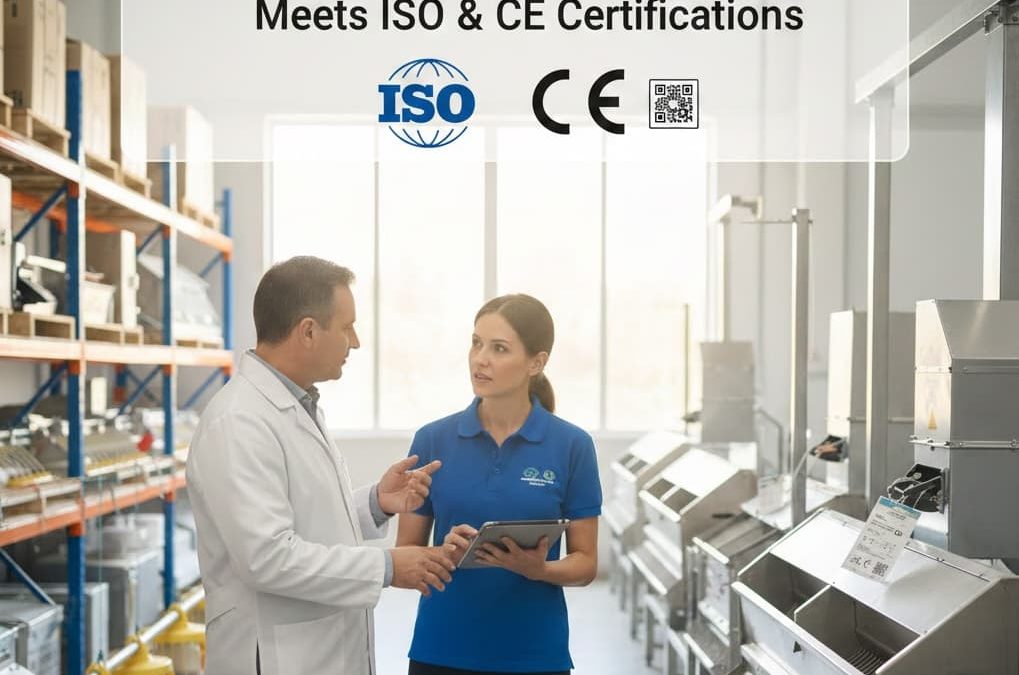
In the competitive world of poultry production, equipment quality directly affects farm performance, animal welfare, safety, and long-term return on investment. Poultry farmers and suppliers alike benefit when equipment not only performs well but also meets international compliance standards like ISO and CE certifications. These certifications act as industry benchmarks that help buyers identify reliable, safe, and globally acceptable machinery — from layer cages and feed systems to climate control and processing units.
Choosing equipment with recognized certifications isn’t just a technical preference. It’s a strategic decision that can open up new markets, guarantee legal compliance, and reduce risk in daily operations.
What Are ISO Standards and Why They Matter
ISO (International Organization for Standardization) develops international standards across a wide range of industries, including quality, safety, environmental management, and more. An ISO certification indicates that a manufacturer adheres to globally accepted processes and controls in their production and quality management systems.
ISO 9001 – Quality Management Systems
Among the most impactful certifications for poultry equipment manufacturers is ISO 9001, which relates to quality management systems (QMS). ISO 9001 certification demonstrates that a company:
Follows documented processes
Monitors performance and customer satisfaction
Implements continuous improvement practices
This helps ensure consistency in product performance, reliable manufacturing practices, and long-term durability of equipment. For poultry buyers, this means reduced downtime, longer equipment lifespan, and enhanced productivity.
Understanding CE Certification and Product Compliance
The CE marking (Conformité Européenne) is a mandatory compliance mark for certain products sold within the European Economic Area (EEA). When equipment has a CE mark, the manufacturer declares that the product meets EU health, safety, and environmental requirements applicable to that product category.
It’s important to note that:
CE is not a quality mark per se — it signifies compliance with relevant EU directives and regulations for safety and performance.
Not all products require CE marking. Only those under specific EU directives (e.g., machinery, electrical equipment) must carry it.
In the context of poultry equipment — such as electric motors, control panels, automated systems or mechanical machinery — CE certification signals that the product is safe for use and can legally be marketed in the EU and many other regions.
1. Assurance of Quality and Consistency
Choosing equipment backed by ISO standards means buyers can expect consistency in build quality, performance, and durability — important for high-load applications like automated feeders, climate control systems or cage structures.
2. Compliance with Safety and Legal Requirements
CE marks provide buyers with confidence that equipment meets key safety directives — such as electrical safety, machinery safety, and environmental protection. For poultry farms exporting products to or operating within Europe, CE compliance is often a regulatory requirement.
3. Better Market Access and Buyer Confidence
Equipment with recognized certifications is more attractive to international markets. For example, CE-compliant poultry cage systems receive more qualified international buyers and easier market entry in the EEA, while ISO-certified products are more likely to be accepted in global supply chains.
4. Improved After-Sales Support and Supplier Reliability
Manufacturers with ISO certifications typically maintain structured after-sales support systems — including maintenance schedules, spare parts supply, and technical service — because sustained quality and customer satisfaction are core to ISO management practices. Suppliers with such credentials generally deliver better support and fewer operational failures.
Common ISO Standards Relevant to Poultry Equipment
While there are hundreds of ISO standards covering various industries, the most commonly relevant ones for poultry equipment suppliers and buyers include:
ISO 9001 — Quality management systems
ISO 14001 — Environmental management systems
ISO 45001 — Occupational health and safety
ISO 22000 — Food safety management
These standards help ensure manufacturers take a comprehensive approach to quality, environmental responsibility, and worker safety.
How to Evaluate and Choose Certified Poultry Equipment
Choosing poultry equipment that truly meets ISO and CE standards requires careful evaluation. Here are practical steps to guide your selection:
✔ Verify Documentation
Always request official certification documents from suppliers — including ISO certificates from accredited bodies and CE Declaration of Conformity. Verify that the certificates are current and cover the specific equipment model. Spec sheets and lab test reports from independent bodies add an extra layer of assurance.
✔ Understand the Scope of Certification
ISO certifications apply to company quality systems, not to individual devices. CE marking applies to specific products under specific directives. Confirm that the certification covers the product category you are purchasing, such as electrical automation systems or mechanical cage units.
✔ Conduct Factory or Supplier Audits
Whenever possible, visit the supplier’s factory or review third-party audit reports. Seeing production processes, quality control systems, and workflows firsthand helps confirm that claimed certifications are meaningful and in practice, not just marketing claims.
✔ Check For Ongoing Compliance
Certifications like ISO require annual audits and surveillance to ensure ongoing compliance. Ask suppliers about audit histories, corrective action histories, and compliance reviews — all of which demonstrate a commitment to continuous quality improvement.
✔ Evaluate After-Sales and Warranty Support
Certified suppliers tend to offer robust after-sales service, warranties, and technical support. This is critical for complex poultry systems, where downtime due to equipment failure can be costly. Evaluate services such as spare parts availability, installation help, and training programs.
Common Misconceptions About Certifications
CE = Quality
Many buyers mistakenly believe that CE marking alone guarantees product quality. In reality, CE primarily indicates regulatory compliance with safety and environmental requirements for specific products. It does not automatically imply superior manufacturing quality.
ISO Is Only for Big Companies
Some believe that ISO certifications are only for large manufacturers. However, businesses of any size can achieve ISO certification as long as they meet the standard’s criteria — and doing so often gives them a competitive edge in global markets.
Build Confidence with Certified Poultry Equipment
In today’s global marketplace, ISO and CE certifications are no longer optional extras — they are essential criteria for selecting poultry equipment that delivers long-term value, ensures safety, and supports sustainable farm growth. Whether you’re investing in automated feeding systems, climate control machinery, or housing equipment, choosing products that meet global standards will help you: