Why Heat Stress Management Matters in Poultry Farming
In tropical climates, heat stress is one of the biggest threats to poultry production. Rising temperatures and high humidity can disrupt normal bird behavior, reduce feed intake, compromise growth rates, lower egg production, and increase mortality. Preventing heat stress is not just about animal welfare — it’s essential for maintaining high productivity, better feed conversion ratios (FCR), and stronger farm profitability.
One of the most effective solutions for mitigating heat stress in poultry houses is the use of advanced cooling pad systems. These evaporative cooling technologies help create a comfortable environment for birds even under extreme weather conditions, especially in hot, dry, or humid tropical regions.
In this guide, we’ll explore how cooling pads work, why they’re ideal for tropical climates, the key benefits for bird health and performance, and how suppliers can offer the right solutions for modern poultry farms.
Understanding Heat Stress in Poultry
Heat stress occurs when birds are unable to dissipate excess body heat. Unlike humans, poultry cannot sweat, so they rely on respiratory cooling (panting) and environmental heat exchange to regulate their temperature. In tropical climates where temperatures can regularly exceed 30 °C and humidity remains high, this becomes extremely difficult — leading to:
-
Reduced feed intake and slower growth
-
Lower egg production and quality
-
Increased mortality rates
-
Poorer FCR and higher production costs
Managing heat stress isn’t optional — it’s a necessity if poultry farms want to maintain high performance and economic sustainability.
What Are Advanced Cooling Pad Systems?
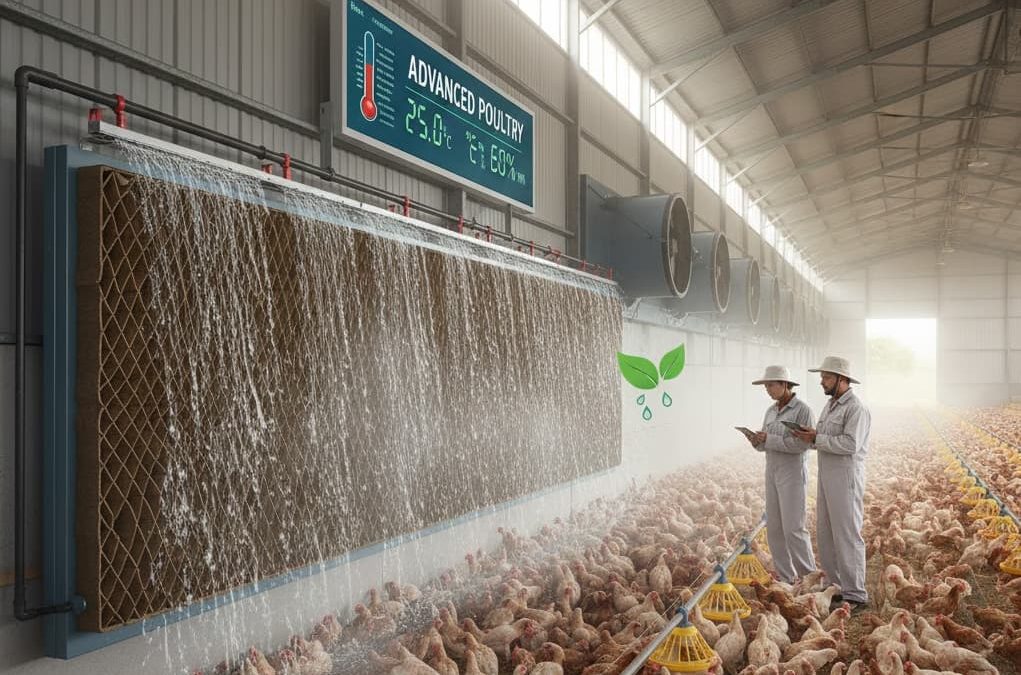
Cooling pad systems, also known as evaporative cooling pads, are a form of climate control technology used in poultry houses to reduce indoor temperatures and create a more comfortable environment for birds. Unlike conventional mechanical cooling (like high-power air conditioners), evaporative cooling relies on the natural principle that air temperature drops when water evaporates.
Here’s how a cooling pad system works:
-
Water is circulated over specially designed pads installed on the air inlet side of the poultry house.
-
As warm outdoor air is drawn through the wet pads by exhaust or tunnel fans, moisture evaporates from the pad surface.
-
The evaporation process absorbs heat from the air, lowering the air temperature significantly before it enters the house.
-
The cooled air circulates throughout the house, creating a stable and comfortable environment for poultry.
Advanced cooling pad systems use high-efficiency pad media — such as cellulose, treated paper, or plastic honeycomb — designed to maximize surface area and deliver consistent cooling performance.
Cooling Pads and Tropical Climates: A Perfect Fit
In tropical regions with intense heat and sometimes low humidity, evaporative cooling pads are particularly effective. These systems can reduce indoor temperatures by 10–12 °C or more under ideal conditions, helping poultry houses stay within the optimal temperature range even during heat waves.
Additional advantages for tropical climates include:
-
Simplicity and low energy consumption: Evaporative pad systems consume far less power than mechanical chillers or air conditioners, making them cost-effective for large poultry houses.
-
Scalability: Systems can be designed for small farms or scaled up for large commercial operations with multiple houses.
-
Adaptability: Pads can be tailored in size, thickness, and material depending on house dimensions and bird density.
-
Reduced heat and humidity spikes: Combined with ventilation and automatic climate control, cooling pads help maintain consistent environmental conditions.
Ultimately, these features help poultry producers fight the effects of heat stress without excessively high energy bills or complex mechanical infrastructure.
Core Benefits of Advanced Cooling Pad Systems
1. Improved Bird Health and Behavior
Cooling pad systems help maintain ambient temperatures within a comfort zone that supports normal bird physiology. Stable, cool conditions reduce panting and stress, helping birds:
-
Eat and drink normally
-
Maintain regular metabolic functions
-
Grow faster and more consistently
Reduced stress also means fewer heat-associated mortalities — a major concern in hot climates that can significantly impact flock performance.
2. Enhanced Feed Conversion and Growth Performance
Heat stress often causes birds to reduce feed intake, which slows growth and disrupts feed conversion ratios (FCR). By keeping temperatures in the optimal range, cooling pads help:
-
Maintain higher feed intake
-
Improve growth rates
-
Boost FCR efficiency
This can translate into faster turnover, greater production output, and increased profitability for growers.
3. Better Egg Production and Quality
For layer operations, heat stress can reduce egg laying rates and affect shell quality. Effective cooling systems ensure that:
-
Layers remain comfortable throughout hot periods
-
Egg yield remains stable
-
Shell quality and size are consistent
This supports higher market value and stronger returns for egg producers.
4. Efficient Water and Energy Use
Modern cooling pad systems are designed for efficiency, making smart use of water and electricity. Because they depend on water evaporation and airflow rather than refrigeration, cooling pads typically require:
-
Lower energy consumption compared to mechanical cooling
-
Effective use of water with recirculation and distribution systems
-
Minimal maintenance when paired with automated filters and controllers
This efficiency is especially valuable in regions where power costs are high or water resources are limited.
5. Integration with Automated Climate Control
Today’s systems can integrate with climate controllers, sensors, and automation platforms, providing real-time monitoring of temperature and humidity. Automated controllers can adjust fan speeds, water distribution, and ventilation — optimizing performance without constant human intervention.
Choosing the Right Cooling Pad System
When selecting advanced cooling pad systems for poultry houses, consider these key features:
-
Pad Material and Efficiency: Cellulose or high-grade plastic pads offer superior evaporative performance and long service life.
-
Pad Thickness and Airflow: Thicker pads typically offer greater cooling but require appropriate fan capacity.
-
Water Distribution Quality: Uniform water application ensures even cooling pad activation.
-
System Integration: Choose systems compatible with automatic controllers for optimized climate management.
-
Maintenance Ease: Look for removable pad frames and easy-to-clean designs that support long-term performance.
Working closely with poultry equipment suppliers to tailor systems to individual farm needs ensures maximum benefit and return on investment.
Best Practices for Cooling Pad Performance
To achieve the best results from cooling pad systems:
-
Perform regular maintenance — clean pads and replace worn or stained media.
-
Ensure proper fan and airflow balance — pairing pads with appropriate ventilation systems maximizes cooling impact.
-
Monitor water quality and distribution — consistent water flow ensures uniform cooling.
-
Integrate automated sensors and controllers — for real-time system adjustments and peak performance.
Cooling Pads for Sustainable Tropical Poultry Production
In tropical climates, heat stress management is essential for maintaining high standards of bird health, productivity, and profitability. Advanced cooling pad systems provide a cost-effective, efficient, and scalable solution to temperature control — delivering better growth performance, stable production outcomes, and improved welfare.
For poultry equipment suppliers, offering high-quality cooling pad systems — with proper sizing, material quality, and automation capability — positions your business as a trusted partner in helping farmers succeed in challenging tropical environments.