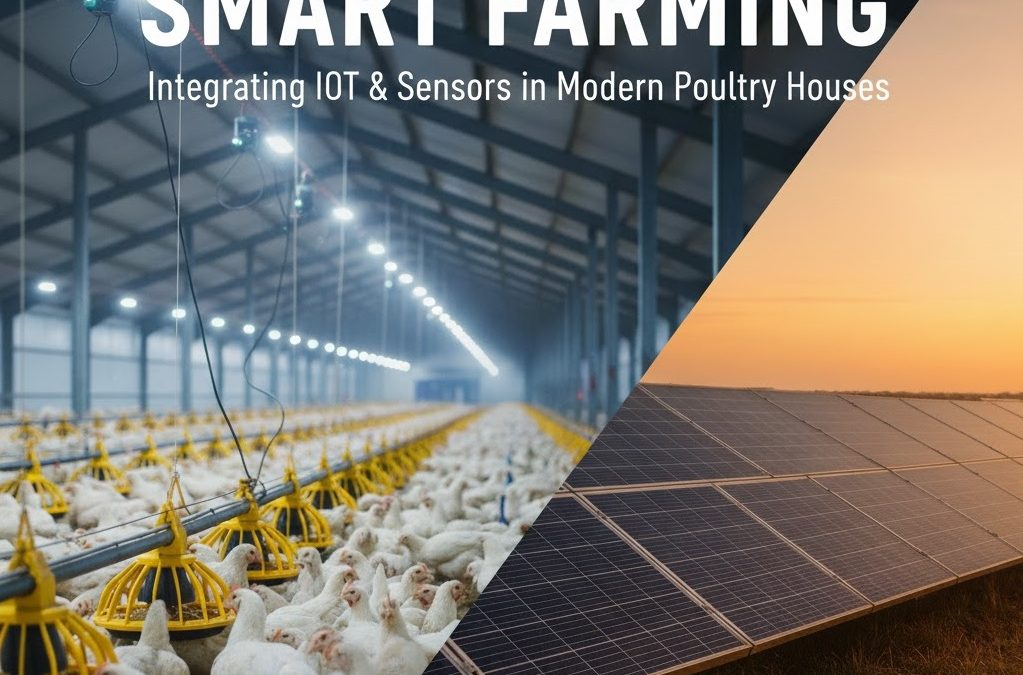
Smart Poultry Farming: How IoT and Sensors Are Transforming Modern Poultry Houses
In today’s poultry industry, innovation is no longer an option — it’s a necessity. As markets demand higher productivity, better animal welfare, and improved operational efficiency, poultry farmers are turning to IoT (Internet of Things) and sensor technologies to transform traditional poultry houses into intelligent, data-driven facilities. By leveraging real-time monitoring, automated control systems, and actionable analytics, modern poultry houses powered by IoT unlock new opportunities for performance, health, and profitability.
In this comprehensive guide, we explore how IoT and sensors are reshaping poultry farming, the key components involved, benefits for farmers, and why integrating these technologies is crucial for competitive operations in 2026 and beyond.
What Is IoT in Poultry Farming?
IoT (Internet of Things) refers to interconnected devices with sensors that collect and exchange data over the internet. In poultry houses, IoT devices and sensors work together to continuously monitor environmental conditions, bird behavior, equipment performance, and more. The real magic happens when this data feeds into dashboards, alerts, and automated control systems that help farmers make smarter, faster decisions.
Why IoT and Sensors Matter for Poultry Houses
Animal health and productivity hinge on the environment inside the poultry house. Poor conditions — whether high ammonia levels, improper humidity, or insufficient ventilation — can lead to disease, stress, and even mortality. Manual inspection alone can’t keep pace with the dynamic conditions within modern poultry production; that’s where IoT excels:
1. Real-Time Environmental Monitoring
Sensors placed throughout poultry houses continuously measure temperature, humidity, gas concentrations (like ammonia and CO₂), and light levels. These real-time insights ensure conditions remain within optimal ranges, boosting flock health and reducing stress.
2. Remote Access and Alerts
With IoT integration, farmers no longer need to be on site 24/7. Mobile apps and cloud dashboards allow remote monitoring and instant alerts when conditions deviate from set thresholds — helping prevent issues before they escalate.
3. Enhanced Disease Detection
Advanced systems can flag abnormal patterns in environmental data or flock behavior, enabling early intervention and disease prevention. Some implementations even track bird activity to indicate health trends, lowering mortality risk and operational costs.
4. Data-Driven Decision Making
Historical and real-time data from sensors provide invaluable insights for improving feeding regimes, ventilation schedules, and breeding strategies. Over time, analytics help refine practices for maximum efficiency.
Key IoT Sensors Used in Poultry Houses
Integrating IoT requires choosing the right sensors for your specific poultry environment. Here are the most commonly deployed sensor types:
• Temperature & Humidity Sensors
Maintaining the correct temperature and humidity directly impacts bird growth and welfare. These sensors ensure your climate control systems respond correctly to environmental changes.
• Air Quality & Gas Sensors
Sensors that detect gases like ammonia (NH₃) and carbon dioxide (CO₂) help maintain breathable air, reduce respiratory illnesses, and improve overall flock health.
• Light & Illumination Sensors
Light intensity affects egg production cycles and behavioral patterns. IoT-controlled lighting systems can mimic natural day-night cycles for healthier flocks.
• Motion & Activity Trackers
Infrared or visual sensors track bird movement, helping identify welfare issues such as lethargy or abnormal aggregations that may signal health problems.
• Feed and Water Level Sensors
Ensuring consistent feed and water supply is essential. Wireless level sensors trigger alerts and automate refills to reduce waste and ensure nutritional needs are met.
Core Components of a Smart IoT Poultry System
A fully integrated poultry IoT system includes more than just sensors:
IoT Gateway
The gateway aggregates sensor data and sends it to cloud platforms for analysis, visualization, and storage. It also enables real-time command and control over connected devices.
Cloud Platform & Analytics
Cloud connectivity allows data visualization, trend analysis, alerts, and integrations with mobile apps. Historical data supports strategic planning and operational improvements.
Actuators & Controllers
Actuators translate sensor insights into action — like turning on fans, adjusting curtains, controlling lighting, or managing feeding systems — to stabilize the environment automatically.
Mobile and Web Dashboards
User-friendly dashboards provide at-a-glance performance indicators and customized alert settings for proactive management.
Benefits of IoT Integration in Poultry Houses
Integrating IoT and sensors yields measurable benefits for poultry operations of all sizes:
1. Improved Animal Welfare
Stable, optimal conditions reduce stress and disease, enhance immune response, and improve overall flock performance.
2. Increased Productivity
Smart monitoring leads to better growth rates, higher feed conversion efficiency, and improved egg production due to tighter environmental control.
3. Cost Savings
Automated systems reduce labor requirements, prevent resource waste, optimize energy use, and lower veterinary expenses.
4. Risk Mitigation
Sensor-triggered alerts allow farmers to address issues before they become costly emergencies — from equipment failure to health emergencies.
5. Operational Insights
Continuous data collection enables long-term trend analysis, helping farms improve strategies and plan for peak production seasons with confidence.
Best Practices for Implementing IoT in Poultry Houses
To maximize ROI and performance, follow proven strategies:
Start With the Essentials
Begin with core environmental sensors like temperature, humidity, and air quality before expanding to advanced health or production tracking.
Ensure Reliable Connectivity
Stable internet or network coverage is critical. Choose gateways that support robust communication technologies suitable for rural areas.
Prioritize Sensor Placement
Correct placement ensures accurate data. Distribute sensors evenly at bird level and near critical equipment like ventilation inlets.
Use Scalable Platforms
Select IoT platforms that grow with your operation — add sensors, analytics, and integrations over time.
Train Staff on Interpretation
Data is powerful, but only if your team understands how to interpret and act on insights from dashboards and alerts.
The Future of Smart Poultry Farming
Integrating IoT and sensors is not just about technology — it’s about transforming poultry management into a precise, data-driven discipline. Smart poultry houses enhance animal welfare, boost productivity, and reduce operational risks while enabling farmers to manage their facilities from anywhere in the world.
For poultry equipment suppliers, offering IoT-ready solutions, sensor packages, and integrated automation systems positions your business at the forefront of agricultural technology. Whether you’re supporting small family farms or large commercial operations, IoT integration represents the future of poultry production — and that future is already here.